You might wonder how much your credit score really affects your car insurance rates. Insurers often rely on credit-based insurance scores to gauge your risk as a driver, which can lead to considerably higher premiums for those with poor credit. But is this practice fair, especially for those facing financial challenges? Understanding the nuances behind this connection could reveal surprising insights about your insurance costs.
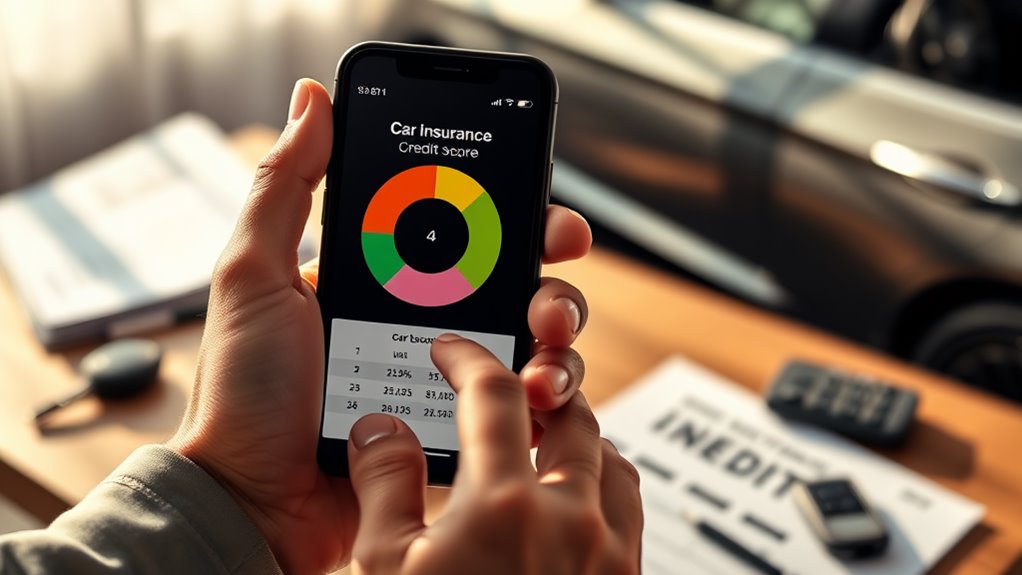
When considering car insurance rates, it's vital to understand how credit scores play a major role in determining your premiums. Insurers use credit-based insurance scores, which differ from standard credit scores, to assess the likelihood of you filing a claim. These scores help them evaluate risk and decide how much to charge for premiums. If you reside in certain states like California or Hawaii, you should know that the use of credit scores in insurance pricing is either banned or restricted. This variance highlights how local insurance regulations can impact your insurance experience.
Your credit-based insurance score considers several factors, including your payment history and delinquencies. Insurers want to see how reliably you've made payments in the past. The length of your credit history also matters; a longer history can indicate more stability. Additionally, they evaluate the types of credit you have, such as loans and credit cards, along with your credit utilization and debt management. Credit-based insurance scores can also impact your eligibility for policies and the amount of your premiums.
It's also worth noting that soft inquiries are typically used to check your credit for insurance purposes, meaning this won't affect your actual credit score.
When it comes to premiums, drivers with poor credit often find themselves paying considerably more than those with good credit. In fact, dropping just one tier in your credit score could lead to an increase in your insurance premiums by approximately 17%. Insurers generally see good credit as a sign of responsible behavior, correlating it with a lower risk of claims. However, keep in mind that your credit score is just one piece of the puzzle; insurance companies also consider other factors when determining rates.
It's essential to differentiate between credit-based insurance scores and standard credit scores. While both types are based on your credit history and payment patterns, they serve different purposes. Standard credit scores predict payment risk for lenders, while insurance scores predict claim risk for insurers. There's no standardized range for these scores either, meaning what's considered a good or bad score can vary from one insurer to another.
The impact of credit scores on your insurance rates can differ widely based on state regulations. While some states limit or ban the use of credit scores in insurance pricing, others may have restrictions on how this information can be utilized. As such, it's wise to check your local laws to understand how they might influence your car insurance costs.
Using credit-based insurance scores has both benefits and drawbacks. On the positive side, they can lead to more accurate risk assessments and potentially lower premiums for low-risk drivers. However, they can also result in higher premiums for those with poor credit, raising concerns about fairness in pricing. Critics argue that relying on credit scores can unfairly penalize financially vulnerable drivers, making it a contentious issue in the insurance industry.
Ultimately, understanding how your credit score impacts car insurance rates is vital for making informed decisions about your coverage.
Conclusion
In conclusion, credit scores greatly shape car insurance rates, serving as a slippery slope for many drivers. While good credit can lead to lower premiums, those with poor scores often face punishing price hikes. It's essential to comprehend how this connection works, especially for those in financially fraught situations. By staying savvy about your credit and its impact, you can steer toward more favorable insurance options, ultimately fostering financial freedom and security on the road.